
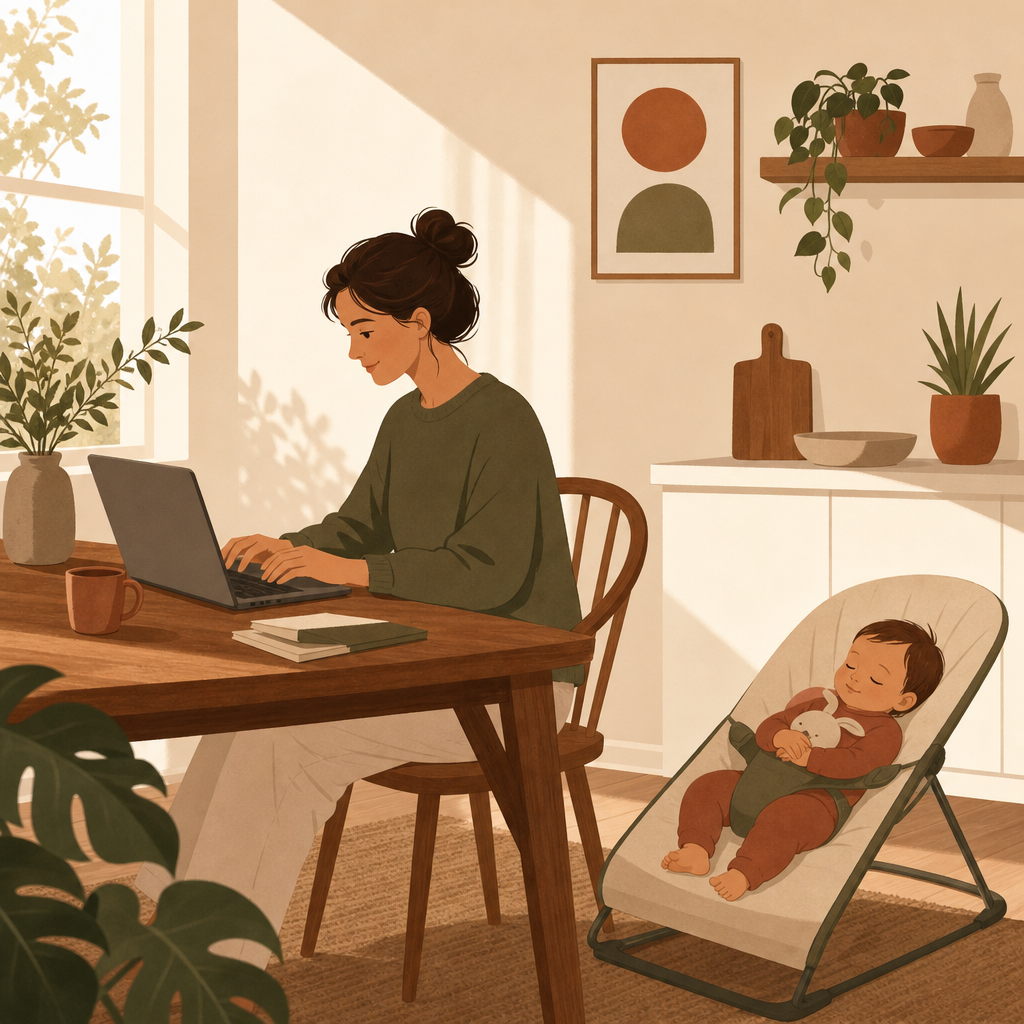
Being the person who stays home with the kids is a full-time role — often more than full-time. But for a lot of stay-at-home parents, there’s a quiet tension between the value of what you’re doing and the financial pressure of being on a single income.
Making extra money as a stay-at-home parent is absolutely possible. It just looks different from a traditional second job, and the options that work best are the ones that genuinely bend around nap times, school pickups, and the unpredictability of life with small children.
This post covers what those options actually look like, what you can realistically expect to earn, and how to start small without overwhelming yourself.
The Real Constraint: Your Time Is Already Spoken For
Before jumping into ideas, it’s worth being honest about the starting point. If you have a baby, a toddler, or multiple young children at home, your available working time is genuinely limited — and it’s often fragmented. You might have an hour in the morning, another while they nap, and an hour or two in the evening after bedtime.
That’s not nothing. Plenty of parents build consistent side income in those windows. But it means the work needs to be stoppable, restartable, and not dependent on uninterrupted focus for hours at a stretch.
Any option on this list needs to pass that test for it to work for you.
Online Work You Can Do From Home
Freelance writing or editing
If you have a way with words — or a professional background that included writing — there is steady work available for content writers, copyeditors, and proofreaders. The work is typically project-based, which suits parents well. You can pick up pieces when you have time and decline when you don’t.
Starting rates are modest, but they grow as you build a portfolio. Platforms like Contena, ProBlogger’s job board, or simply pitching local businesses directly are all reasonable starting points.
Virtual assistant work
A virtual assistant (VA) handles admin tasks for small business owners — scheduling, email management, data entry, customer enquiries, social media posting. There’s no single skill required; the most in-demand VAs are simply reliable and organised.
Pay ranges from around $15 an hour at the low end to $35+ for specialist VAs with experience in particular software or industries. VA Facebook groups and platforms like Belay or Fancy Hands are good places to start.
Online tutoring
If you have a degree or professional expertise, tutoring your subject online is one of the better-paid options for stay-at-home parents. Sessions are typically one hour, prescheduled, and can be arranged around your available windows. Platforms like Tutor.com, Wyzant, or Superprof handle the matchmaking.
Rates vary widely — anything from $15 to $60+ per hour depending on subject and level.
Transcription and captioning
Transcription doesn’t pay a lot per hour, but the work is completely flexible — you pick up tasks and return them when done. Rev.com and TranscribeMe are the most accessible entry points. It’s not going to replace an income, but it can be a genuinely easy starting point while you figure out a longer-term direction.
Selling from Home
Etsy and digital products
Printables, digital planners, templates, and educational resources sell consistently on Etsy with no physical fulfilment required. If you have design skills — even basic Canva-level skills — this is worth exploring. It takes time to build, but once a listing is up, it earns without ongoing effort.
Reselling
Buying items cheaply (from charity shops, Facebook Marketplace, or clearance sections) and reselling them for a profit is a well-worn strategy that works if you have an eye for what sells. Children’s clothing, branded goods, and vintage items are consistently popular.
The effort is real — photographing, listing, packaging, posting — but it can be done in small chunks, and it compounds as you get faster.
Local and Community Options
For parents whose children are in preschool part-time, or who have a partner or family member available for a few hours a week, local service work can bring in good money with low overheads.
Ironing, cleaning, gardening, dog walking, childminding, and meal prep are all things that local families and individuals pay for regularly. Word of mouth works well in these areas — one or two good clients can keep you steadily busy.
What to Realistically Expect
In the first month or two, expect to earn very little while you’re learning and setting up. A realistic medium-term target (six to twelve months in) for part-time effort around family life is somewhere between £150 and £500 per month, depending on the route and the hours you can put in.
Don’t benchmark yourself against people who’ve been doing it for years or who have more childcare support than you do. The goal isn’t to replace a salary in month one — it’s to build something that adds up consistently.
How to Start Without Overwhelming Yourself
Pick one option. Just one. Spend two weeks exploring it before you decide whether it suits you. If it doesn’t, try the next one.
The parents who make this work tend to treat it like a habit rather than a sprint. Twenty minutes a day moving the thing forward is more sustainable than one big burst every fortnight.
If you’re looking for ideas that go beyond making money — managing what you already have more effectively — our posts on side hustles for parents and easy money habits for busy parents are worth reading. And for the bigger picture of making a family budget work, how to save money as a family covers the essentials.
You don’t need a perfect plan or a lot of spare time. You just need a starting point and enough consistency to keep going.