
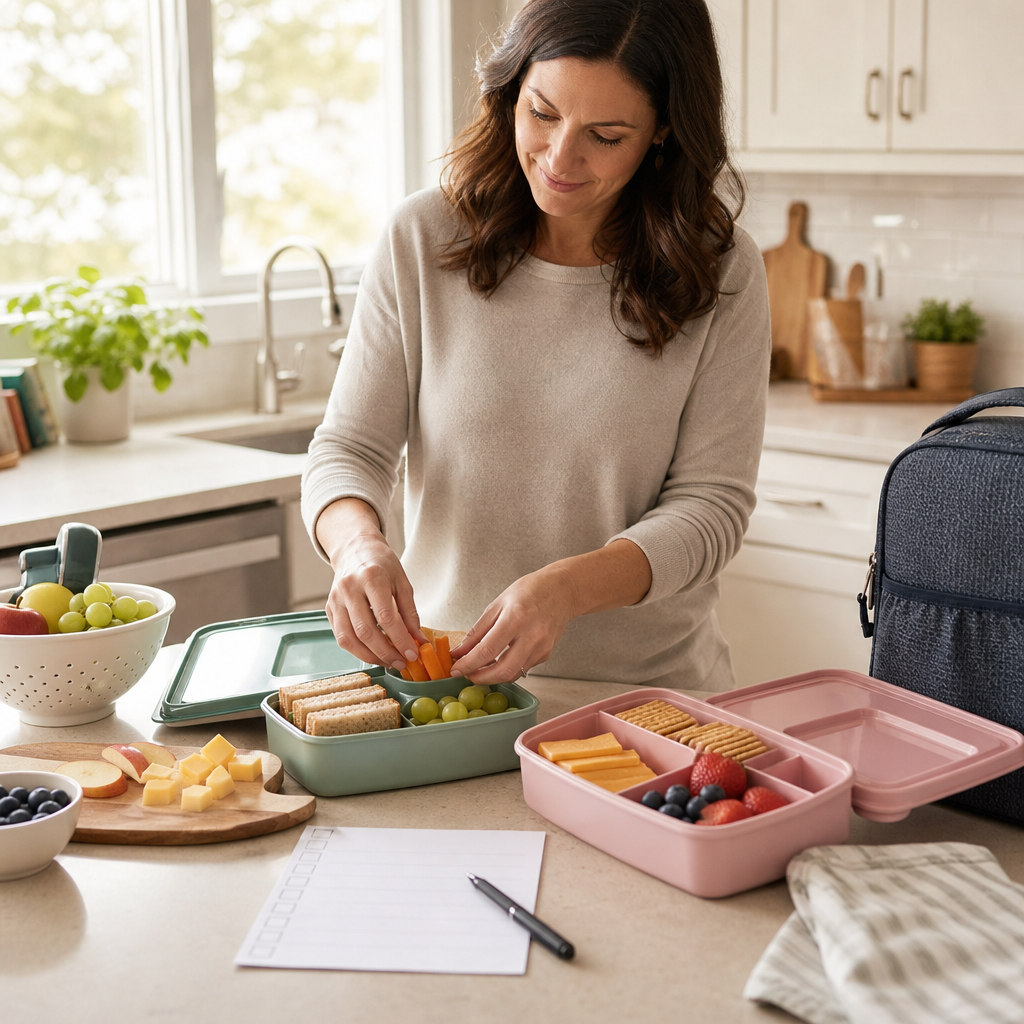
A lunchbox grocery budget can get messy fast, especially with picky eaters.
You buy snacks they promise they will eat. Half comes home untouched. Then you buy safer foods, but the individually wrapped packs are expensive. By the end of the week, lunchboxes have quietly become one of the most frustrating parts of the grocery bill.
The answer is not a perfect Pinterest lunch. It is a simple repeatable system that keeps food costs lower and mornings easier.
Why Lunchboxes Quietly Raise the Grocery Bill
Lunchbox food often costs more because it is bought for convenience.
Common budget leaks include:
- single-serve snack packs
- foods kids liked last week but reject this week
- too many “just in case” options
- fruit that gets bruised or ignored
- novelty snacks bought under pressure
- lunch foods separate from the rest of the meal plan
None of this means you are doing anything wrong. It means lunchboxes need a budget system, not more willpower.
Create a Lunchbox Formula
Use a simple formula instead of inventing lunch every morning.
Try:
- one main item
- one fruit or vegetable
- one crunchy item
- one protein or dairy item
- water
Examples:
- sandwich + apple slices + crackers + cheese
- pasta salad + grapes + pretzels + yogurt
- tortilla roll-up + cucumber + popcorn + boiled egg
- rice balls + orange slices + crackers + cheese
- mini bagel + carrots + cereal mix + yogurt
The formula gives structure while still allowing picky eaters to choose from safe foods.
Build a “Safe Food” List
Write down lunchbox foods your child usually eats.
Group them by category:
Main foods
- sandwich
- wrap
- pasta
- rice
- mini muffins
- bagel
- leftovers if accepted
Fruit and vegetables
- apple slices
- grapes
- bananas
- cucumber
- carrots
- corn
- berries when affordable
Crunchy foods
- crackers
- pretzels
- popcorn
- cereal mix
- tortilla chips
Protein or dairy
- cheese
- yogurt
- boiled eggs
- hummus if accepted
- peanut butter if allowed
Now you can shop from the list instead of guessing.
Stop Buying Too Many Options
Too many lunchbox choices can increase waste.
Try choosing:
- two main options
- two fruits or vegetables
- two crunchy options
- two protein or dairy options
That is enough variety for the week without turning the pantry into a snack store.
If your child wants more choice, rotate the options next week.
Replace Some Single-Serve Snacks
Single-serve snacks can be useful, but they are usually more expensive.
Pick one or two packaged conveniences that genuinely save your sanity. Then replace the rest with bigger packs portioned at home.
Good candidates:
- crackers
- pretzels
- popcorn
- cereal
- trail mix if your child eats it
- cookies or small treats
Use reusable containers or small bags. The goal is not to make every item from scratch. The goal is to stop paying extra for every single serving.
Use a Lunchbox Bin
Create one lunchbox bin in the pantry and one in the fridge.
The pantry bin can hold:
- crackers
- pretzels
- snack portions
- napkins
- reusable containers
The fridge bin can hold:
- cheese
- yogurt
- cut fruit
- vegetables
- boiled eggs
This makes mornings faster and helps kids pack part of their own lunch.
Track What Comes Home
For one week, notice what returns uneaten.
Do not make it a lecture. Just track patterns.
Ask:
- Was there too much food?
- Was it hard to open?
- Did it get soggy?
- Was lunch too rushed?
- Is this food no longer safe for the picky eater?
Uneaten food is budget information.
If something comes home three times, stop buying it for now.
Use Leftovers Carefully
Leftovers can save money, but only if your child will actually eat them cold or reheated.
Good lunchbox leftovers might include:
- pasta
- pizza toast
- rice balls
- pancakes
- muffins
- chicken pieces
- quesadilla triangles
Do not rely on leftovers your child is unlikely to eat. That creates waste and stress.
Use leftovers as a bonus, not the whole lunchbox strategy.
Try This Weekly Lunchbox Budget Routine
Once a week:
1. Check what came home uneaten.
2. Pick two mains.
3. Pick two fruits or vegetables.
4. Pick two crunchy foods.
5. Pick two protein or dairy foods.
6. Portion one or two bulk snacks.
7. Put everything in lunchbox bins.
This takes a little planning, but it saves decision-making every morning.
Final Thoughts
A lunchbox grocery budget works best when it is simple and repeatable.
You do not need endless variety. You need safe foods, fewer wasted snacks, and a system your child can help with.
Start with the foods they actually eat. Limit the options. Portion a few snacks yourself. Track what comes home.
That is how lunchboxes get calmer and cheaper.
For more help, read budget meals for picky eaters, grocery budget reset for families, and easy money habits for busy parents.