
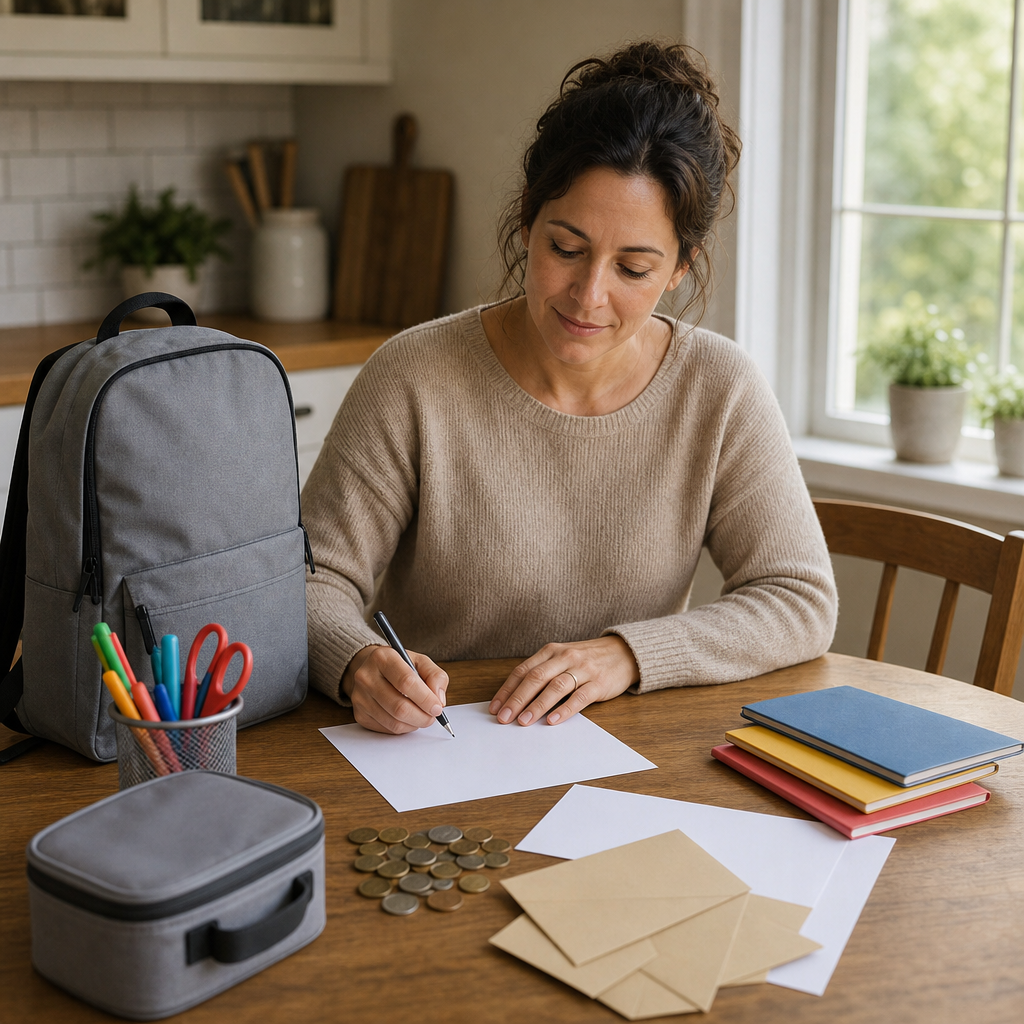
A back-to-school sinking fund is a simple way to stop school shopping from hitting the family budget all at once.
Back-to-school costs are rarely just pencils and notebooks. For many families, the real bill includes shoes, clothes, backpacks, lunchboxes, sports fees, tech, haircuts, snacks, and the small school extras that show up right when money already feels tight.
Starting early helps. Even a small weekly amount can make the final shop less stressful.
Here is a practical way to build a back-to-school sinking fund before the rush.
Why Back-to-School Needs Its Own Mini Fund
Back-to-school is one of those expenses that feels predictable in theory but messy in real life.
You know it is coming. But the exact list changes. Kids grow. Shoes wear out. Teachers ask for specific supplies. Activities restart. Lunchbox food suddenly matters again.
Consumer surveys from Deloitte and PwC have shown that parents often spread out purchases, trade down where they can, and focus on essentials during back-to-school season. That fits what many families already feel: the spending is expected, but still heavy.
A sinking fund turns that one big hit into smaller weekly steps.
What to Include in the Fund
Do not only budget for classroom supplies.
Include categories like:
- school supplies
- backpack or lunchbox
- shoes
- uniforms or clothes
- sports or activity fees
- school photos
- haircuts
- tech or headphones
- lunchbox containers
- snacks and lunch staples
- transport costs
- emergency extras
The goal is not to predict every dollar perfectly. The goal is to stop being surprised by the obvious categories.
Pick a Target Number
Start with last year if you can.
Ask:
- What did we spend on supplies?
- Did we buy shoes or clothes?
- Were there activity fees?
- Did lunchbox groceries jump?
- What did we forget?
If you do not know, pick a starter target.
For one child, that might be:
- lean target: $150
- moderate target: $300
- fuller target: $500+
For multiple children, separate the basics from the child-specific costs. Some supplies can be shared or reused, but shoes, clothes, fees, and backpacks often cannot.
Use an 8-Week or 12-Week Plan
Once you have a target, divide it by the weeks left.
Examples:
- $240 target over 12 weeks = $20 per week
- $300 target over 10 weeks = $30 per week
- $400 target over 8 weeks = $50 per week
If that number feels too high, lower the target and decide what you will handle later.
A partial sinking fund is still useful. Saving $120 before school shopping is better than saving nothing.
Create Three Spending Buckets
Split the fund into three buckets:
1. **Must buy** — supplies, required items, shoes that no longer fit
2. **Likely buy** — clothes, lunchbox items, activity basics
3. **Nice if possible** — first-day outfit, extra accessories, upgraded backpack
This makes decisions easier when the list grows.
If the money runs short, bucket three waits.
That is not failure. That is the budget doing its job.
Shop the House First
Before buying anything, check what you already have.
Look for:
- unused notebooks
- pencils and pens
- folders
- rulers
- lunch containers
- backpacks
- water bottles
- sports gear
- clothes that still fit
- shoes that can last another term
Kids do not need every item to be brand new just because the school year is new.
Reuse is one of the easiest savings wins.
Buy Early, But Not Everything Early
Buying early can help you spread the cost, but it can also lead to mistakes.
Buy early:
- basic supplies on sale
- shoes if you find a good fit and price
- lunchbox containers
- reusable water bottles
- items you know are required every year
Wait on:
- teacher-specific supply lists
- clothing sizes if your child is growing quickly
- trend items
- optional accessories
- anything your child may change their mind about
Early shopping works best when it is intentional, not panic buying.
Add Lunchbox Groceries to the Plan
Back-to-school often changes the grocery budget too.
Lunchbox foods, snacks, drinks, and easy breakfasts can add up quickly. If you ignore this category, your school supply budget may look fine while the grocery bill jumps.
Add a small lunchbox starter amount to the fund.
Use it for:
- reusable containers
- bulk snacks
- lunch staples
- freezer backup foods
- easy breakfast items
This connects the school budget to real family life.
Let Kids Help With Trade-Offs
Older kids can understand a simple version of the budget.
Try:
“We have money set aside for shoes, supplies, and a few clothes. If you want the more expensive backpack, we need to spend less somewhere else.”
This is not about making kids feel guilty. It is about teaching trade-offs in a calm way.
Back-to-school can be a useful money lesson when it is handled without shame.
A Simple Back-to-School Sinking Fund Template
Use this quick setup:
- Target amount: $____
- Weeks until school shopping: ____
- Weekly amount: $____
- Must-buy bucket: $____
- Likely-buy bucket: $____
- Nice-if-possible bucket: $____
- Reuse list checked: yes / no
- Lunchbox starter amount: $____
Keep it simple. A note on your phone is enough.
Final Thoughts
A back-to-school sinking fund will not make school shopping free, but it can make it calmer.
Start with a target. Save weekly. Check what you already own. Separate must-buy items from nice-to-have items. Add lunchbox groceries before they surprise you.
The earlier you start, the less one shopping trip has to carry.
For more help, read family budget categories for busy parents, easy money habits for busy parents, and grocery budget reset for families.