
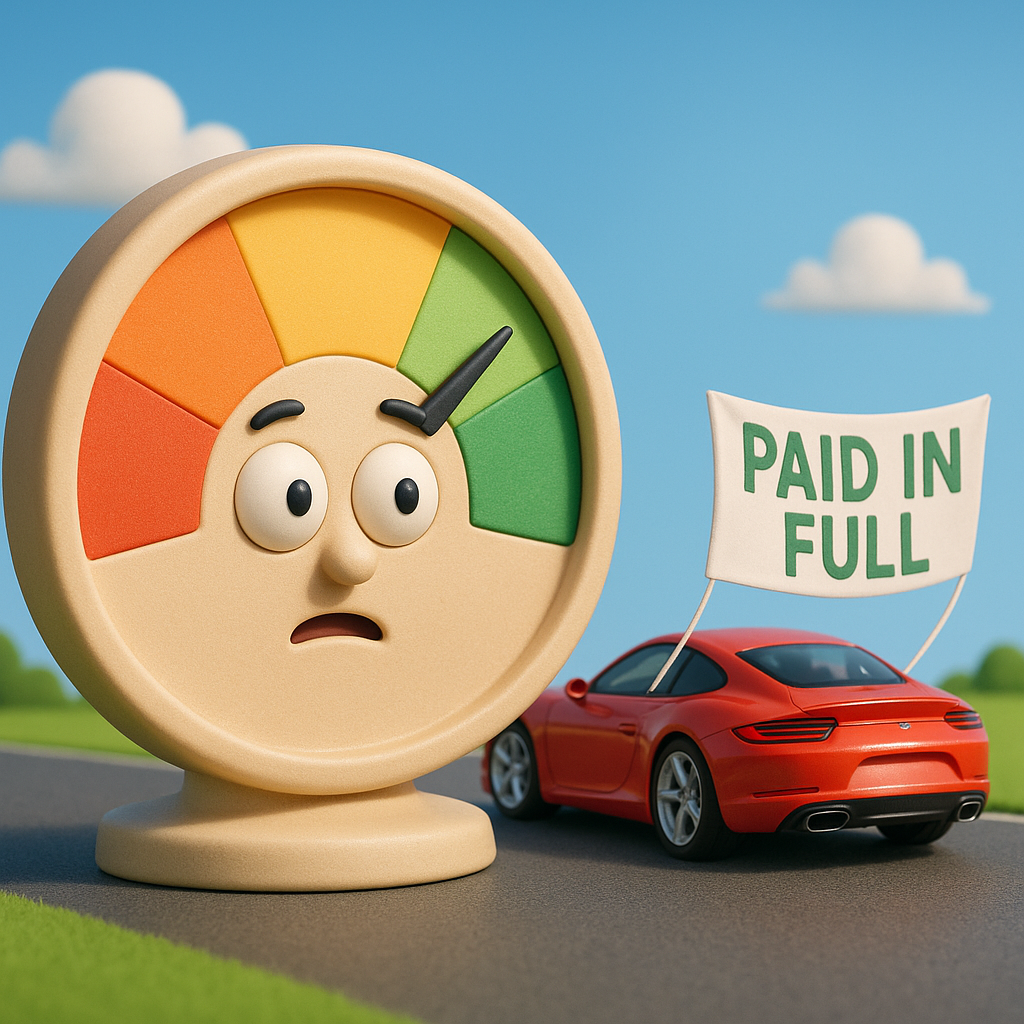
The Short Answer: Maybe (But Don’t Panic)
Paying off a car loan early is like breaking up with a partner who’s been holding you back — it feels freeing, but it might cause a short-lived awkward phase.
Yes, your credit score might take a dip when you close out your car loan. No, it’s not a financial death sentence. In fact, most of the time, the dip is small, temporary, and totally worth it if the payoff saves you big on interest or stress.
Let’s break down why it happens, how long it lasts, and how to soften the blow.
Why Your Credit Score Might Drop
1. Your Credit Mix Changes
Credit scoring models (like FICO and VantageScore) love variety — credit cards, mortgages, auto loans, personal loans. When you pay off your car loan, you’re closing out one type of account, so your “credit mix” score could slip a bit.
💡 Example:
If you only have two active accounts — a car loan and one credit card — paying off the car means you’re down to a single account type. That’s less “credit diversity” in the eyes of lenders.
2. Your Average Account Age Shifts
Credit scores reward you for having older accounts. If your car loan was one of your longest-running active accounts, closing it can lower your average account age — especially if most of your remaining accounts are newer.
3. Fewer Active Accounts Reporting
An open installment loan that you pay on time every month sends a steady “responsible borrower” signal to the credit bureaus. Once it’s gone, that steady drip of positive data stops.
Why It’s Usually Temporary
Credit scores are snapshots in time. Paying off a loan doesn’t erase your good payment history — in fact, that record can stay on your report for up to 10 years as “closed, paid as agreed,” which is a good thing.
Most people see their score recover within a few months, especially if they:
-
Keep making on-time payments on other accounts
-
Maintain low credit card balances (below 30% utilization — 10% is ideal)
-
Avoid applying for too much new credit all at once
When Paying Off Early Is Still the Best Move
-
You’re saving big on interest — especially if your loan rate is above 5–6%.
-
You need cash flow freed up for other priorities (like saving for a house or paying down higher-interest debt).
-
You’re not applying for new credit soon, so a short-term dip won’t hurt you.
📌 Example:
If your $15,000 loan at 6% costs $900/year in interest, early payoff saves you that money guaranteed — even if your score dips for a couple of months.
How to Minimize the Credit Score Dip
1. Keep Other Accounts Active
Use a credit card for small, regular purchases and pay it in full every month to maintain positive activity.
2. Don’t Close Old Accounts
Older accounts boost your credit age, so keep them open (even if you rarely use them).
3. Avoid Major Credit Changes All at Once
Don’t pay off your car loan and close two credit cards and apply for a new mortgage in the same week. Space out big credit moves.
4. Maintain Low Credit Utilization
Keep your credit card balances low relative to their limits to offset any temporary scoring dip.
Special Note: If You’re Applying for a Mortgage Soon
If you’re within 3–6 months of applying for a mortgage, consider holding off on early payoff. Even a small score drop can affect your interest rate or loan approval. After you’ve got the keys? Pay that car loan off and celebrate.
Bottom Line
Paying off a car loan early can cause a short-term score drop, but it’s rarely a reason to avoid it if you’re financially ready. Just be strategic: keep other accounts active, watch your utilization, and time your payoff to avoid impacting major loan applications.