
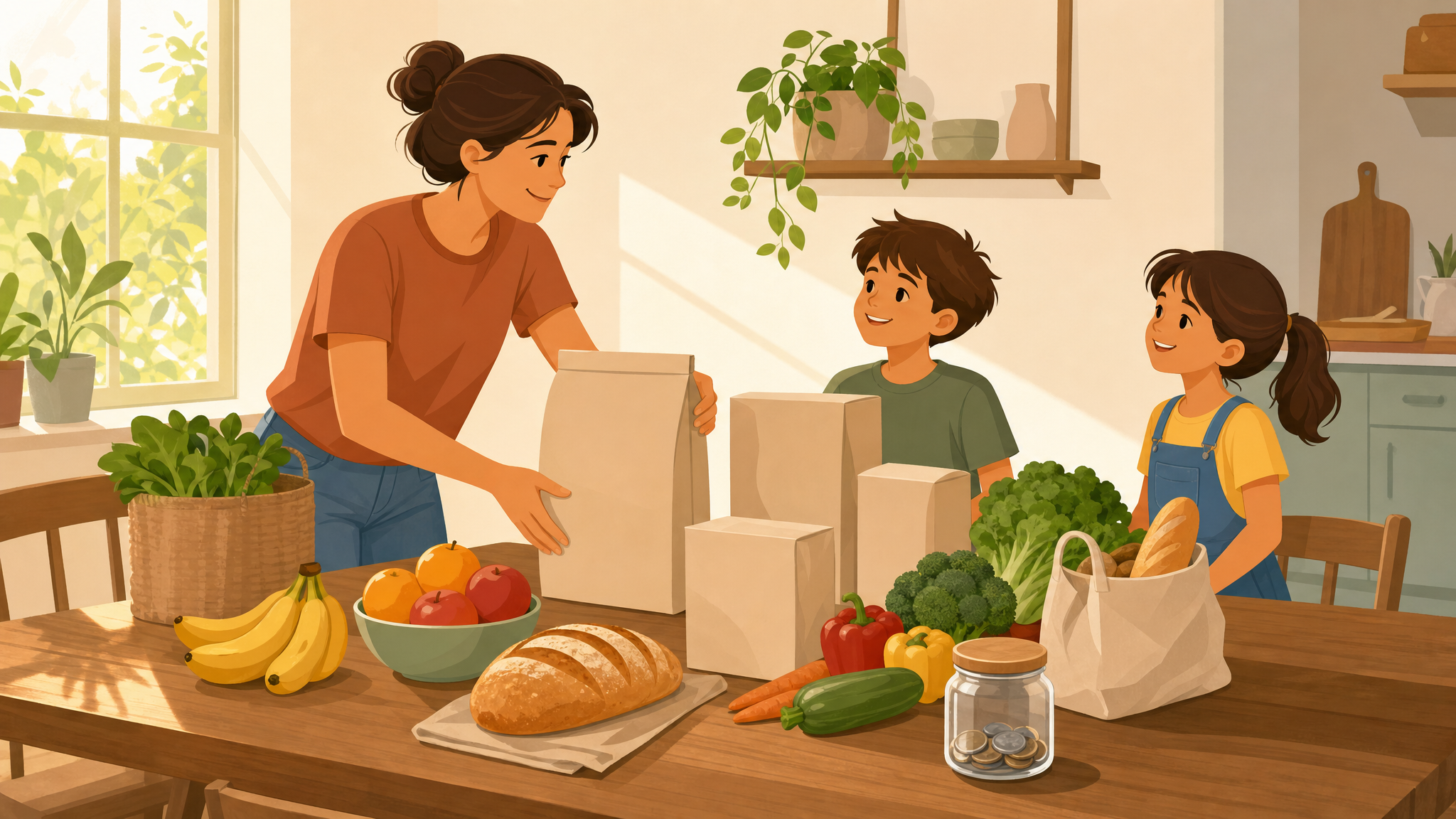
Summer can quietly make the grocery budget harder.
When school is closed, kids are home more, snacks disappear faster, and families who rely on school meals may suddenly need to cover more breakfasts, lunches, and daytime food. SUN Bucks is designed to help with that gap.
For 2026, SUN Bucks, also called Summer EBT in some places, provides **$120 in grocery benefits per eligible school-age child** during the summer.
This guide explains what SUN Bucks is, who may qualify, whether you need to apply, what the money can buy, and what parents should check before summer starts.
Quick note: SUN Bucks rules and application details can vary by state, Tribe, or territory. Use this as a plain-language starting point, then confirm details with the official USDA SUN Bucks page or your local agency.
Quick Answer: What Is SUN Bucks?
SUN Bucks is a summer grocery benefit for eligible school-age children.
The USDA says SUN Bucks provides $120 in grocery benefits per eligible child when school is out for summer. The benefit can be used to buy food from authorized retailers in participating states, Tribes, and territories.
In some locations, the program may be called Summer EBT instead of SUN Bucks.
For families, the simple version is:
- eligible children may receive $120 for summer groceries
- many children are enrolled automatically
- some families need to apply
- the money is usually added to an EBT card or sent on a separate card
- it can be used at many places that accept SNAP or EBT
- it is separate from free summer meal sites
Why This Matters for Family Budgets
Summer food costs can jump because school meals disappear for weeks.
Even if your family is careful with groceries, summer can mean:
- more lunches at home
- more snacks
- more kids in the house during work hours
- more quick meals between camps, activities, and errands
- higher pressure to buy convenience food
SUN Bucks will not cover every summer grocery cost, but $120 per eligible child can still help. For the bigger seasonal picture, see how to build a summer camp budget for families.
For two eligible children, that could mean $240 toward groceries. For three children, $360.
That is real money in a family budget, especially when paired with a simple family saving routine.
Who May Be Eligible for SUN Bucks in 2026?
Eligibility depends on where you live and how your state, Tribe, or territory runs the program.
According to the USDA, children may be automatically enrolled if they are school-aged and their household already receives benefits such as:
- SNAP
- TANF
- FDPIR
- certain other income-based benefits
Children may also be automatically enrolled if they attend a school that offers the National School Lunch Program or School Breakfast Program and their household income makes them eligible for free or reduced-price school meals.
If your child is not automatically enrolled, they may still qualify. In that case, you may need to apply through the agency that handles SUN Bucks where you live.
Do You Need to Apply?
Some families do not need to apply. Others do.
You may not need to apply if your child is automatically enrolled through benefit programs or school meal eligibility.
You may need to apply if:
- your child is not already connected to SNAP, TANF, FDPIR, or similar programs
- your school does not already have the right income information
- your child attends a school where meals are free for everyone, but your household income has not been individually certified
- your address or school records may be out of date
- your local agency tells families in your situation to submit an application
The safest move is to check the USDA SUN Bucks page, select your state, Tribe, or territory, and follow the local instructions.
Some places have specific application windows. For example, Virginia says 2026 applications are processed starting in May 2026 and end August 31, 2026. Other places may use different dates.
How Families Receive SUN Bucks
The delivery method depends on where you live.
The USDA says SUN Bucks may be:
- added to an existing SNAP account
- issued on a separate EBT card
- sent in another way depending on the local program
Some families will see the benefit appear on an existing EBT card. Others may receive a new card in the mail.
This is why your mailing address matters.
Before summer, check that your school, benefits office, or local agency has your current address. A wrong address can delay the card or make it harder to use the benefit before it expires.
What Can You Buy With SUN Bucks?
SUN Bucks can be used for many normal grocery items.
The USDA lists examples such as:
- fruits and vegetables
- meat, poultry, and fish
- dairy products
- breads and cereals
- snack foods
- non-alcoholic drinks
The USDA also says SUN Bucks cannot be used for items such as:
- hot foods
- pet foods
- cleaning or household supplies
- personal hygiene items
- medicine
A simple rule of thumb: think groceries, not household supplies.
If you are not sure whether a store accepts SUN Bucks, look for stores that accept SNAP or EBT, or use the SNAP Retailer Locator linked from the USDA page.
SUN Bucks vs Free Summer Meals
SUN Bucks and summer meal sites are related, but they are not the same thing.
SUN Bucks is a grocery benefit for eligible school-age children.
SUN Meals are free meals and snacks available to kids 18 and under at approved locations such as schools, parks, and community sites. The USDA says no application is needed for those meal sites.
Some rural areas may also offer SUN Meals To-Go.
Families can often use both types of help if they are available:
- SUN Bucks for groceries at home
- SUN Meals for free meals during the day
- SUN Meals To-Go in eligible rural areas
That combination can make summer food costs much easier to manage.
A Simple Parent Checklist
Before summer gets busy, run through this checklist:
- Check whether SUN Bucks is available where you live
- See if your child may be automatically enrolled
- Confirm your school or benefits office has your current mailing address
- Look for any local application deadline
- Apply if your family is not automatically enrolled but may qualify
- Watch your mail for a separate EBT card if you do not already have one
- Check your existing EBT card if your household receives SNAP
- Save the local helpline or agency contact page
- Use benefits for groceries before they expire
- Pair SUN Bucks with free summer meal sites if needed
This does not need to be complicated. The important part is checking early enough that you do not miss the local deadline.
How to Stretch the $120 Benefit
SUN Bucks is useful, but it can go quickly if you spend it without a plan.
Try giving the money a clear job before you shop.
1. Cover the foods kids eat every day
Start with ordinary summer staples:
- breakfast foods
- sandwich supplies
- fruit
- yogurt
- eggs
- rice or pasta
- beans
- frozen vegetables
- simple snacks
These are not flashy, but they reduce the daily pressure.
2. Build a few easy lunch options
Summer lunches can drain the budget because they happen every day.
Pick three repeatable lunches your kids will actually eat, such as:
- sandwiches and fruit
- eggs and toast
- rice bowls
- pasta and vegetables
- bean and cheese wraps
- leftovers plus fruit
The goal is not gourmet. The goal is fewer expensive emergency meals.
3. Use it with a grocery reset
If your grocery budget feels messy, use SUN Bucks as a reset point.
Take stock of what you already have, plan around it, then use the benefit to fill gaps.
This pairs well with a simple grocery budget reset for families.
4. Keep some easy snacks ready
Summer snack costs can sneak up.
If your kids are old enough, create a snack shelf or snack basket with clear limits. That makes it easier to avoid random grazing through expensive items.
Simple options might include fruit, crackers, popcorn, cheese, yogurt, or homemade muffins.
Common Mistakes to Avoid
Mistake 1: Assuming everyone gets it automatically
Many children are enrolled automatically, but not all. If you are unsure, check your state or local agency instructions.
Mistake 2: Ignoring mail from your agency or school
A card, notice, or eligibility letter may arrive by mail. Do not toss it without checking.
Mistake 3: Waiting until late summer
Some applications have deadlines, and benefits may take time to issue. Check early.
Mistake 4: Using unofficial information only
Rules can vary by state. Use the USDA page or your state agency page, not only social media posts.
Mistake 5: Forgetting free summer meal sites
Even if SUN Bucks helps, free summer meal sites can reduce costs further. Use both if they fit your family.
What If SUN Bucks Is Not Available Where You Live?
The USDA says its SUN Bucks page is updated as agencies finalize plans for 2026.
If SUN Bucks is not available where you live, still check:
- SUN Meals sites near you
- SUN Meals To-Go in eligible rural areas
- local food banks
- school district meal programs
- community centers
- libraries
- churches or nonprofits
Summer food help is not always in one place. A few small resources together can make the month easier.
Bottom Line
SUN Bucks 2026 can give eligible families $120 per school-age child for summer groceries.
Many children will receive it automatically, but some families need to apply. The exact process depends on where you live, so the best next step is to check the official USDA SUN Bucks page and your local agency instructions.
If you qualify, treat the benefit like part of your summer grocery plan: cover the basics first, pair it with free meal sites if needed, and use it before it expires.
Summer does not have to be perfect. It just needs to be a little easier to feed everyone without blowing up the family budget.
Make summer money planning calmer
If summer groceries, camp, and school costs are all landing at once, start with one simple family money system. The free Family Money Starter Kit helps parents talk about saving, spending, and planning with kids in real life.
FAQ
How much is SUN Bucks in 2026?
The USDA says SUN Bucks provides $120 in grocery benefits per eligible school-age child during the summer.
Is SUN Bucks the same as Summer EBT?
Yes. SUN Bucks may also be called Summer Electronic Benefits Transfer or Summer EBT in some locations.
Do I have to apply for SUN Bucks?
Some children are enrolled automatically through benefit programs or school meal eligibility. Other families may need to apply through their state, Tribe, or territory agency.
What can SUN Bucks buy?
SUN Bucks can buy many grocery foods such as fruits, vegetables, meat, dairy, bread, cereal, snacks, and non-alcoholic drinks. It cannot buy hot foods, pet food, cleaning supplies, personal hygiene items, or medicine.
Can kids still use free summer meal sites?
Yes. SUN Meals are separate from SUN Bucks. Free summer meals and snacks are available to kids 18 and under at approved locations, and no application is needed for meal sites.
Sources
- USDA SUN Bucks
- USDA Summer Nutrition Programs
- Virginia SUN Bucks 2026 application page
- San Mateo County Summer 2026 EBT SUN Bucks update