
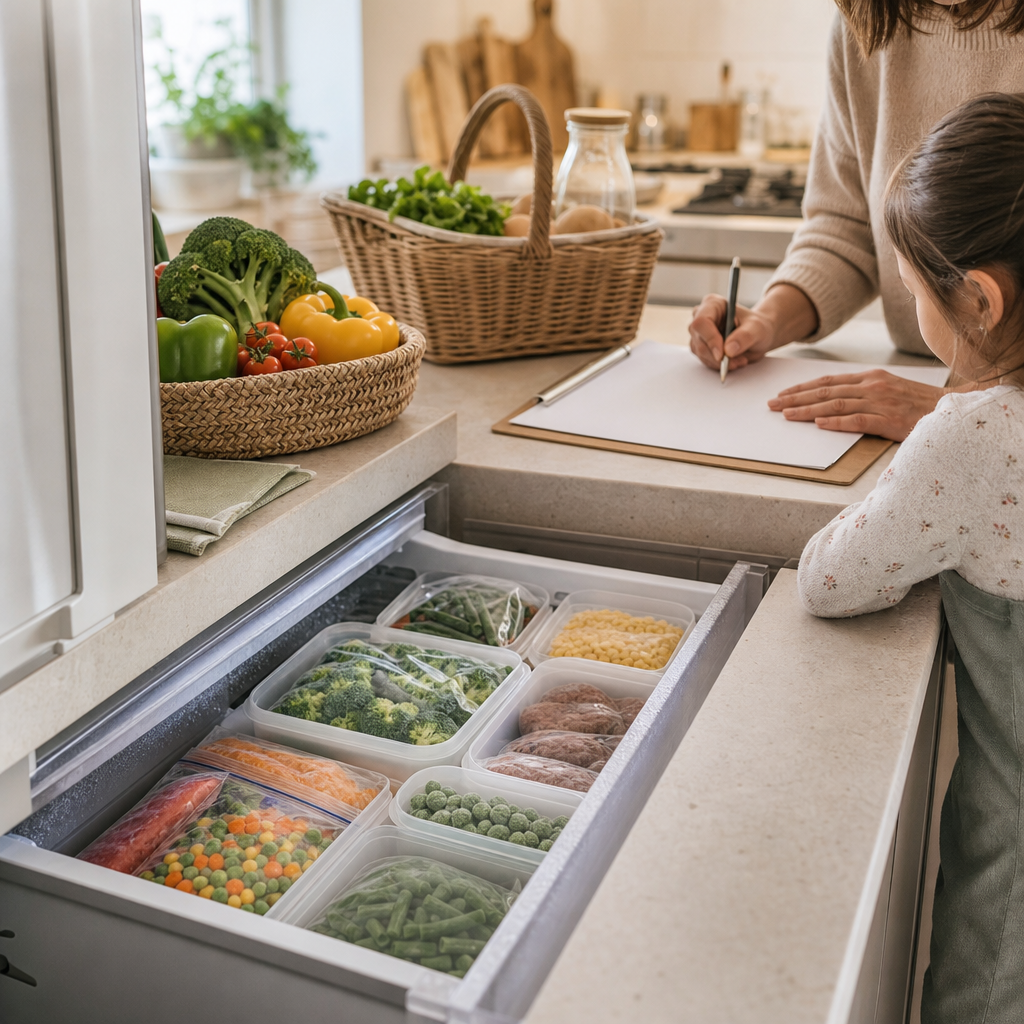
Freezer meal planning can be one of the easiest ways for families to save money without making dinner complicated.
For a long time, freezer food had a reputation as the backup option. But for busy parents, it can be a practical tool: less waste, fewer emergency takeout nights, and more flexible meals when the week does not go to plan.
The goal is not to fill the freezer with random boxes. The goal is to use freezer food on purpose.
Why Frozen Food Is Having a Moment
The 2026 Power of Frozen in Retail report from FMI and AFFI points to a clear trend: more households are using freezer staples as part of meal planning, not just as emergency food.
That makes sense for families.
Fresh food is important, but it can also spoil quickly when schedules change. Frozen ingredients give you more time to use what you bought.
That matters when grocery prices still feel high and parents are trying to make every shop stretch further.
Start With Frozen Ingredients, Not Frozen Meals
The most useful freezer items are often simple ingredients.
Good staples include:
- frozen vegetables
- frozen fruit
- chicken pieces
- fish fillets
- ground meat
- dumplings
- bread or tortillas
- cooked rice
- smoothie fruit
- homemade sauce portions
These give you flexibility. A bag of frozen vegetables can go into pasta, rice bowls, soup, omelets, fried rice, or sheet-pan dinners.
Prepared frozen meals can still have a place, but ingredient-based planning usually gives better value.
Build Three Freezer Backup Meals
Every family should have a few backup meals that can be made with very little energy.
Try building three:
- pasta, frozen vegetables, and jar sauce
- frozen dumplings with vegetables
- rice bowls with frozen veg and eggs
- quesadillas from frozen tortillas and cheese
- soup with frozen vegetables and toast
- fish fillets with oven fries and peas
These meals are not failures. They are what keep a hard night from becoming an expensive night.
Use Frozen Food to Reduce Waste
Food waste is one of the quietest grocery budget leaks.
Frozen food helps because it waits.
If your family often throws away fresh spinach, berries, herbs, or vegetables, try buying some of those items frozen instead.
You can still buy fresh food. Just be honest about what your household consistently uses before it spoils.
A realistic grocery list is better than an aspirational one.
Pair Frozen With Fresh
Frozen food works best when it supports fresh food, not replaces it completely.
Simple combinations:
- frozen peas with fresh pasta sauce
- frozen fruit with yogurt
- frozen broccoli with fresh chicken
- frozen corn with taco bowls
- frozen berries with pancakes
- frozen spinach in eggs or soup
This keeps meals flexible and helps fresh ingredients go further.
Make a Freezer Inventory
You do not need a complicated spreadsheet.
Use a small note on your phone or a paper list near the freezer.
Track:
- proteins
- vegetables
- fruit
- bread/tortillas
- backup meals
- leftovers
Check the list before shopping. The freezer only saves money if you remember what is in it.
Do a “Freezer First” Meal Once a Week
Choose one night each week where dinner starts from the freezer.
Ask:
“What can we make mostly from what is already here?”
This could be:
- fried rice
- soup
- pasta
- tacos
- breakfast-for-dinner
- sheet-pan dinner
A freezer-first night clears space, reduces waste, and delays the next grocery top-up.
Watch for the False Savings
Frozen food is useful, but not everything in the freezer aisle is a bargain.
Watch for:
- tiny portions
- expensive single-serve meals
- heavily packaged snacks
- items your family only eats once
- freezer food that replaces cheaper homemade basics too often
The test is simple: will this help us avoid waste, reduce takeout, or make a real meal easier?
If yes, it may be worth it. If not, skip it.
A Simple Starter Freezer List
If you are starting from scratch, try:
- two frozen vegetables
- one frozen fruit
- one protein
- one bread or tortilla option
- one backup dinner
- one leftover container from a meal you already cooked
That is enough. You do not need a full freezer system on day one.
Final Thoughts
Freezer meal planning is not about lowering standards. It is about making real family meals easier to manage.
Use frozen ingredients for flexibility. Keep a few backup meals ready. Check the freezer before shopping. Build one freezer-first dinner into the week.
Small systems like this can make the grocery budget feel less fragile.
For related help, read grocery budget reset for families, Smart meal planning for a family grocery budget, and how to save money as a family.